Can I Put Cruiser Handlebars on a Mountain Bike?
Can I Put Cruiser Handlebars on a Mountain Bike? A Simple Guide for Beginners
https://kinfuda.com/category/blog/
https://bearclawbicycleco.com/
1. What’s the Difference Between Cruiser Handlebars and Mountain Bike Handlebars?
Before you swap, let’s make sure you know what makes these two bike handlebar types different. They’re built for totally different rides, so understanding their design will help you see if a swap makes sense for how you use your bike.
Cruiser Handlebars: Built for Comfort
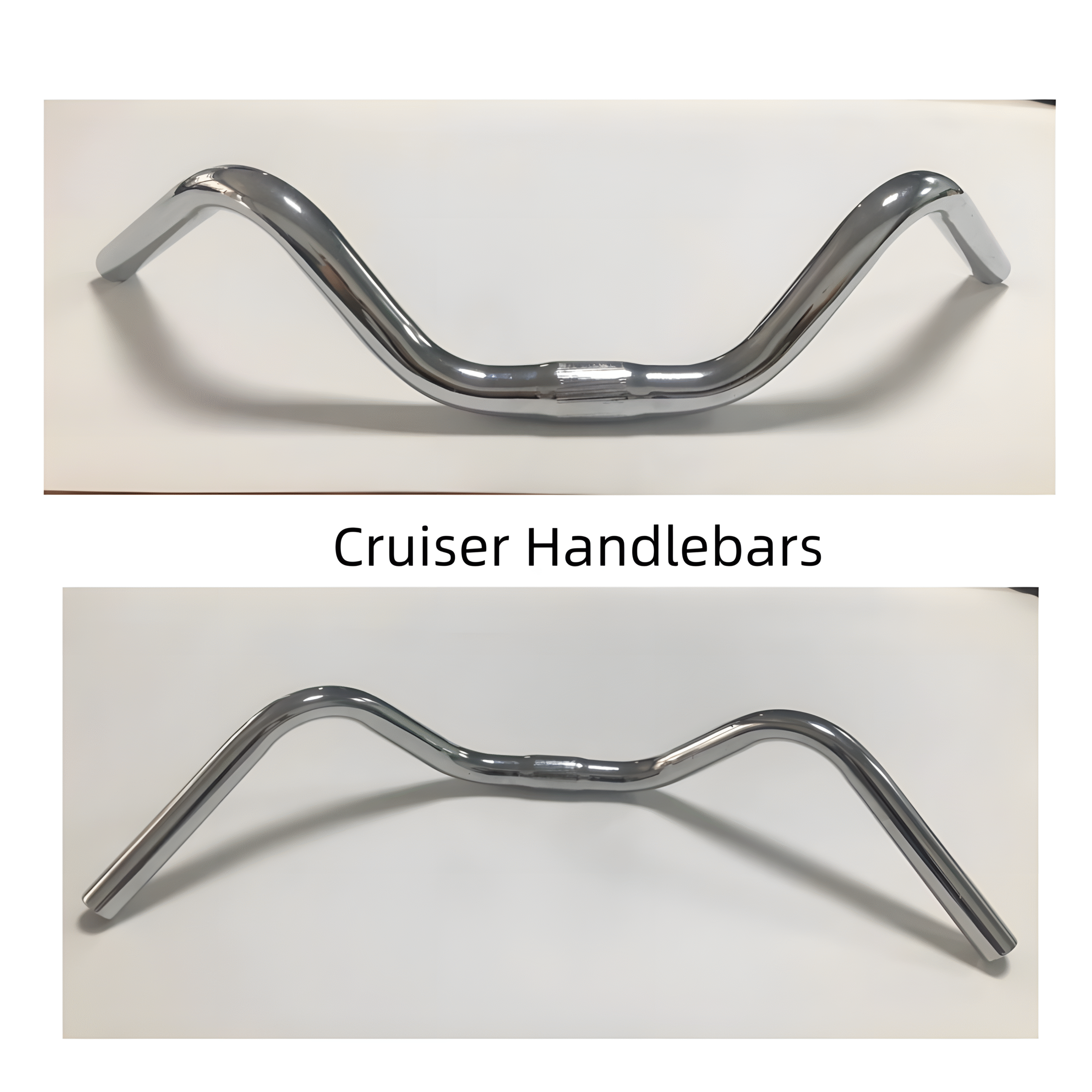
Cruiser handlebars (sometimes called “beach cruiser handlebars” or “city cruiser handlebars”) are all about relaxation. Here’s what makes them unique:
- Shape: They’re wide (usually 24–28 inches across) and curved upward, like a gentle “U” or “sweep.” This curve lets you hold the bar in different positions—near the ends, in the middle, or even closer to the stem (the part that connects the handlebar to the bike’s frame).
- Ride Position: When you use cruiser handlebars, you sit more upright. Your back stays straight, your shoulders relax, and your wrists aren’t bent forward (unlike with mountain bike bars). This is perfect for slow, casual rides—like cruising to the park or commuting to work on flat roads.
- Material: Most cruiser handlebars are made of aluminum (lightweight, easy to carry) or steel (stronger, better if you hang a bag or basket on the bar). They’re usually thicker than mountain bike bars to feel sturdy.
- Weight: They’re a bit heavier than mountain bike handlebars, but that’s okay for casual rides—you won’t notice the extra weight if you’re not racing or off-roading.
Mountain Bike Handlebars: Built for Control
Mountain bike handlebars (often called “flat bars” or “riser bars”) are made for rough terrain—dirt trails, rocks, and hills. Here’s how they differ:
- Shape: They’re narrow (usually 20–24 inches across) and straight (or slightly raised, called “riser bars”). No big curve—this lets you grip the bar firmly and quickly turn the bike, which is key for off-roading.
- Ride Position: Mountain bike handlebars push you into a forward-leaning position. Your chest is closer to the handlebar, your arms are bent to absorb bumps, and your weight is over the front wheel. This position gives you more control on rough trails but can strain your back and wrists on long, flat rides.
- Material: Almost always aluminum (lightweight for climbing hills) or carbon fiber (super light but expensive). They’re thinner than cruiser bars to save weight.
- Features: Many mountain bike handlebars have small “bar ends” (extensions on the ends) or places to mount gear like lights, GPS, or water bottle holders. Cruiser bars usually don’t have these—they’re simpler.
2. Is It Possible to Swap? Key Compatibility Checks
You can put cruiser handlebars on a mountain bike, but only if they “fit” with your bike’s other parts. Think of it like putting a new lid on a jar—if the lid’s size doesn’t match the jar’s mouth, it won’t work. Here are the 4 most important things to check before you buy a cruiser handlebar:
Check 1: Handlebar Diameter (The Most Important!)
Every bike handlebar has a diameter (thickness) where it connects to the stem (the metal piece that attaches the handlebar to the bike’s frame). If the cruiser handlebar’s diameter doesn’t match your stem’s size, it won’t clamp on tight—and that’s dangerous (the handlebar could move while you ride).
Here’s how to check:
- Grab a tape measure: Measure the outsideof your mountain bike’s current handlebar (where it goes into the stem).
- Check the stem’s inside size: If you don’t want to remove the old handlebar, look up your bike’s brand and model online—most bike companies list the stem size (e.g., “31.8mm stem”).
- Match to cruiser handlebars: Cruiser handlebars almost always come in 25.4mm diameter (this is a standard size for casual bikes). Mountain bike stems are usually 31.8mm (modern bikes) or 25.4mm (older bikes).
bike’s current handlebar (where it connects to the stem).
- Measure the stem’s inner diameter: If you prefer not to remove the existing handlebar, search for your bike’s brand and model online. Most bike manufacturers provide stem size specifications—for example, “31.8mm stem” is a common measurement.
- Compare with cruiser handlebar dimensions: Cruiser handlebars typically feature a 25.4mm diameter, a standard size for recreational bicycles. Mountain bike stems usually come in two sizes: 31.8mm for modern models and 25.4mm for older bikes.
bike’s current handlebar (where it goes into the stem).
Before attempting any handlebar swap, it’s crucial to accurately measure the diameter of your bike’s stem where the handlebar inserts. This measurement will determine compatibility with cruiser handlebars. Here’s a detailed process to guide you:
- Check the stem’s inside size:
If you don’t want to remove the old handlebar, look up your bike’s brand and model online—most bike companies list the stem size (e.g., “31.8mm stem”). You can also use a digital caliper for a precise measurement. Wrap the caliper around the inside of the stem where the handlebar fits. Make sure the jaws of the caliper are snug against the inner walls of the stem for an accurate reading. If you don’t have a caliper, you can purchase a stem size measuring tool from a local bike shop or online. These tools are inexpensive and can save you a lot of hassle.
- Match to cruiser handlebars:
Cruiser handlebars typically have a 25.4mm diameter, standard for casual bikes. Mountain bikes use 31.8mm (modern models) or 25.4mm (older versions) stem diameters. If your mountain bike has a 31.8mm stem, an adapter is required to fit 25.4mm cruiser bars.
bike’s current handlebar (where it connects to the stem).
Measuring the stem’s inner diameter is a key step in determining whether cruiser handlebars will fit your mountain bike. Here’s how to approach this measurement effectively:
- Measure the stem’s inner diameter:
If you prefer not to remove the existing handlebar, search for your bike’s brand and model online. Most bike manufacturers provide stem size specifications—for example, “31.8mm stem” is a common measurement. Another option is to take your bike to a local bike shop. The staff there can quickly measure the stem for you using professional tools. If you choose to measure at home, ensure the bike is stable and secure. Place it on a bike stand or have someone hold it steady while you measure. Remember, a small error in measurement can lead to compatibility issues, so take your time and double-check your measurements.
- Compare with cruiser handlebar dimensions:
Cruiser handlebars typically feature a 25.4mm diameter, a standard for casual bikes. Mountain bikes generally have 31.8mm stems on newer models and 25.4mm on older ones. When picking cruiser bars, consider the rise and sweep for a comfortable ride.Mismatched diameters? 5–10 shim is the fix. This small metal or plastic ring inserts into the stem. For example, a 31.8mm-to-25.4mm shim adapts a 25.4mm cruiser bar to a 31.8mm stem. Installation is quick and easy, allowing hassle-free handlebar swaps.
Check 2: Brake and Shift Cable Length
Your mountain bike uses cables (or fluid, for hydraulic brakes) to work the brakes and shifters (the levers that change gears). Cruiser handlebars are wider and curved, so the existing cables might be too short—if they’re too short, you won’t be able to squeeze the brakes or shift gears properly.
Here’s how to check: